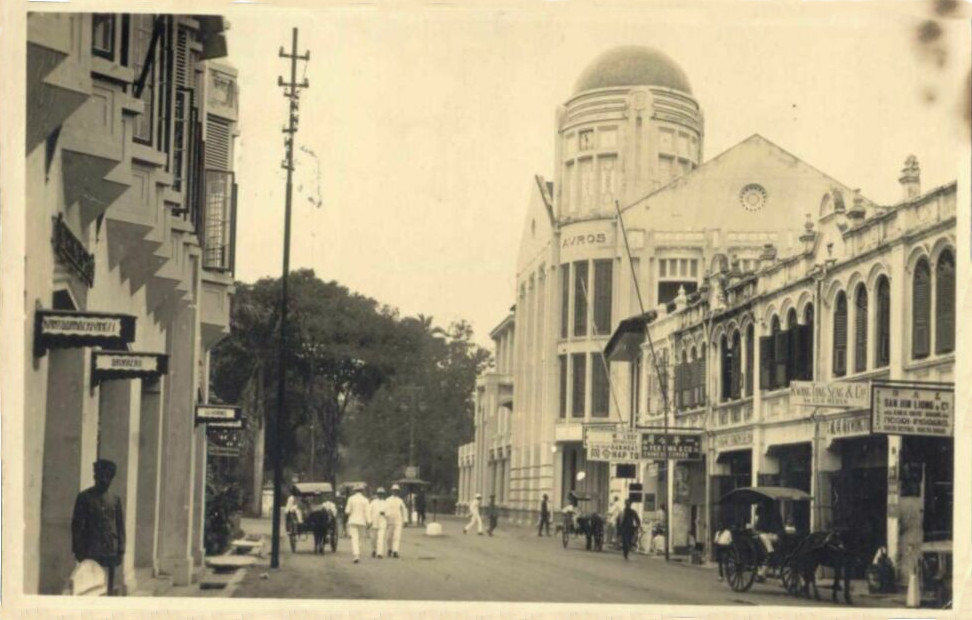
Medan was a name of a village settled by Guru Patimpus Sembiring Pelawi in 1590 and located in Tanah Deli. The strategic location between 2 rivers, Deli and Babura, made the village becoming one busiest trading route and developed significantly. In 1641, Netherlands came to Deli led by Arent Patter. At first they came to Deli with the intention to take some slaves, but later the relationship between Netherlands and Deli was about mangrove plantation.
Medan (Indonesian pronunciation: [me?dan]; Indonesian: Kota Medan) is the capital of North Sumatra province in Indonesia. Located on the northern coast, and with 2,097,610 inhabitants at the 2010 census. Medan is the fifth largest city in Indonesia by population after Jakarta, Surabaya, Bandung and Bekasi, also the third largest city by land area (behind Jakarta and Surabaya), and the largest Indonesian city outside Java. Its built-up (or metro) area made of 18 municipalities or districts was home to 4,103,696 inhabitants at the 2010 census. The city is bordered by the Deli Serdang Regency to the east, south and west, and the Strait of Malacca to the north, make the city located very strategically for economy as the Strait of Malacca is one of the most important shipping lanes in the world.
Medan is the gateway to the western part of Indonesia where Belawan Port and Kuala Namu International Airport which is the second largest airport in Indonesia are exist. Access to the port of Belawan from Medan city center down south to industrial district of Tanjung Morawa is equipped by Belmera Toll Road, the first toll road outside of Java Island.
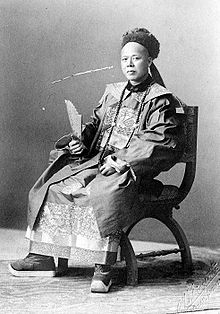
Tjong A Fie, a kapitan of Medan and one of contributor to the early development in the city.
The city was founded by the Guru Patimpus, the karonese man which named a swampy land in confluence of Deli River and Babura river as Kampung Medan as the first settlement around and then in 163 The Deli Sultanate was established by Tuanku Gocah Pahlawan the 1st King or Sultan. In 18th century, the 8th Sultan Sultan Mahmud Al Rasyid Perkasa Alam opening a relationship with the Dutch, and Jacob Nienhuys a Dutch tobacco merchants pioneered the opening of the tobacco plantation in Deli Land that make the name changed to Medan-Deli when it was established by Dutch tobacco commerce after the formation of the Deli Company. With the help from the 9th Sultanate Sultan Ma’mun Al Rasyid Perkasa Alam also by the most known Chinese businessman duo at that time Tjong Yong Hian and Tjong A Fie, the rapid development of the economy transform Medan-Deli into a big trading center with the nickname as het land dollar aka the land of the money. The Deli Railway was established for shipping rubber, tea, timber, palm oil, and sugar industries from the city to Belawan, a port town up to north area. After Independence, Medan also was a capital of East Sumatra, a state of United States of Indonesia during 1449 to 1950 and then finally changed to capital of North Sumatra in mid 1950.
Medan was dubbed by the Dutch Parijs van Soematra due to the city’s resemblance to Paris. Lamudi, a worldwide real estate portal, recognized Medan as one among six cities in Asia to feature and preserve several colonial architectural sites, while accompanying its growth as a metropolitan city.
In recent years, the development growth rise rapidly with a large scale infastructure such as a new airport, seaport, elevated railroad, toll roads, and also a planned mass rapid transit. Bringing a major-scaled properties, mixed developments and housings is being built. One of the favorable markets in the country’s property industry outside Java is Medan. The rising demand in North Sumatra’s capital is also due to Java’s increasingly rapid population growth. The way that a new airport has been developed to become bigger and grander has helped make Medan a more attractive place to visit. Residential property prices in Medan have trended upward over the period from 2013 to the first quarter of 2015, according to Bank Indonesia (BI). According to BI, Medan’s residential property price index rose from 205.24 in the fourth quarter of 2013 to 212.17 in the fourth quarter of 2014, and to 214.41 in the first quarter of 2015.